Destinations
Where to next?
The places most trips are built around
Six places that come up in almost every itinerary — some detail on what each is actually like, so you know what you're choosing between.
 East Coast
 Pasikuda Beach & Arugam Bay surfing
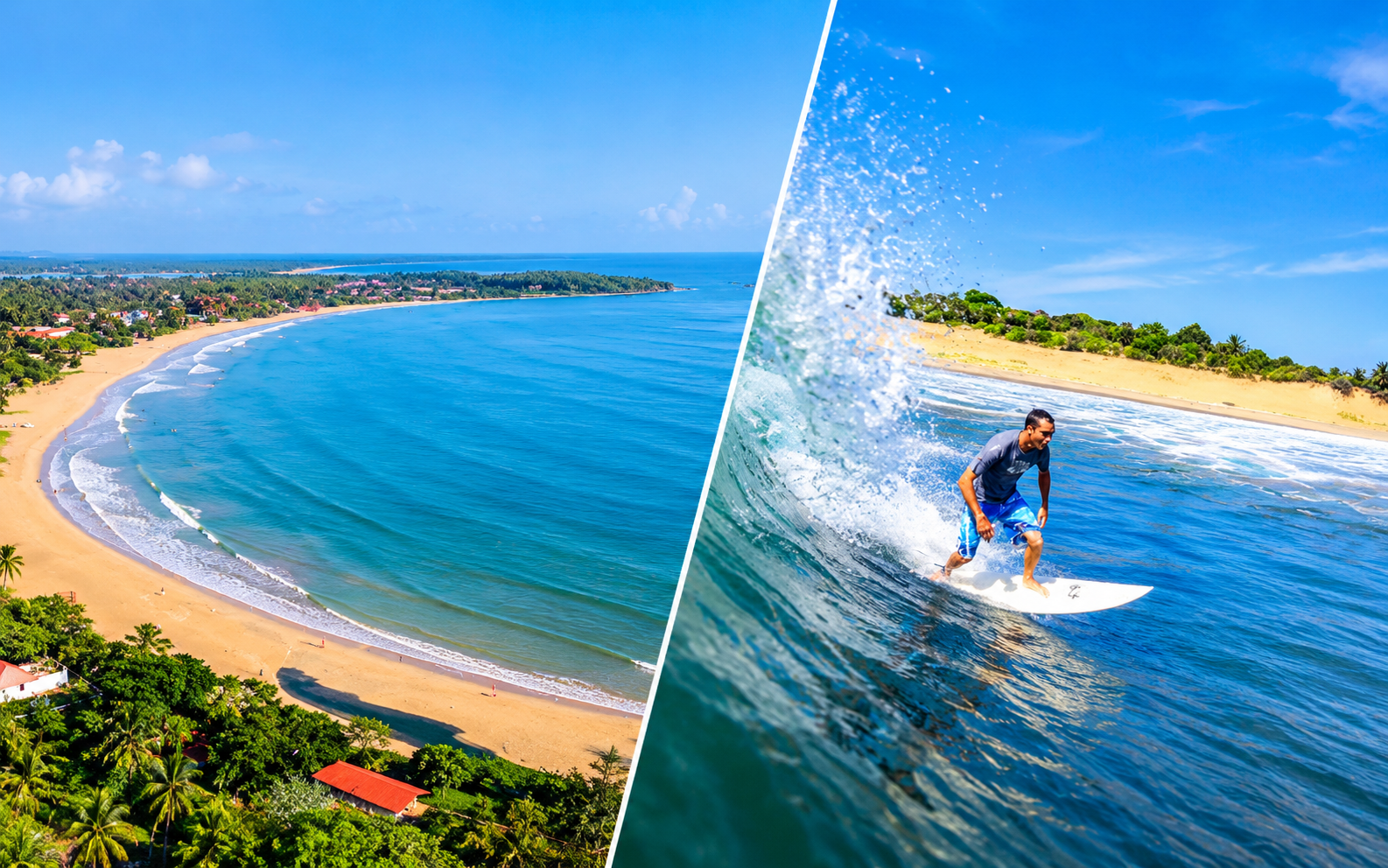
A wide, shallow bay on the east coast — famously calm, warm water you can wade into for hundreds of metres.
Pasikuda is known for one of the flattest, calmest bays in Sri Lanka — the shallow water stretches out so far that it feels more like a giant natural pool than open ocean.
It has grown into a relaxed resort strip on the east coast, popular for swimming, snorkelling and simply floating in warm, glass-calm water.
Arugam Bay is a famous surf and beach town on the southeast coast of Sri Lanka, located about 330 kilometers from Colombo. Known for its laid-back vibe, it attracts global surfers and travelers looking for tropical sun, wildlife safaris, and quiet sandy shores.
- Famously calm, shallow water — great for kids and non-swimmers
- Snorkelling over the reef just offshore
- Relaxed, less crowded than the south coast resorts
- World-Class Surfing: Home to famous right-hand point breaks like Main Point, Whisky Point, and Elephant Rock, suitable for beginners and pros alike
- Kumana National Park safari
- Arugam Bay restaurants and cafes
- Batticaloa Dutch Fort
- Kallady Bridge -Visit Sri Lanka's long iron bridge to learn about the local "singing fish" phenomenon
 Southern Province
Yala National Park
One of the highest leopard densities anywhere in the world.
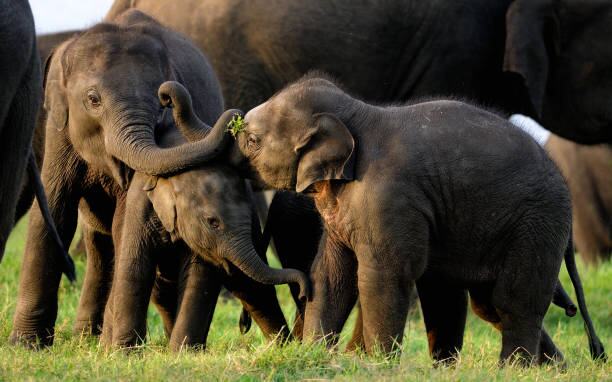
Yala is Sri Lanka's most visited national park, and the reason most people come: elephants in loose family herds, crocodiles along the tank edges, and — if you're patient and a little lucky — a leopard crossing the track at first light.
The park is split into blocks; Block 1 is the busiest but also the most reliable for sightings. Early morning and late afternoon drives are noticeably quieter and cooler than midday.
- Highest leopard density in Asia
- Large elephant herds year-round
- Coastal lagoons with crocodiles and waterbirds
 South Coast
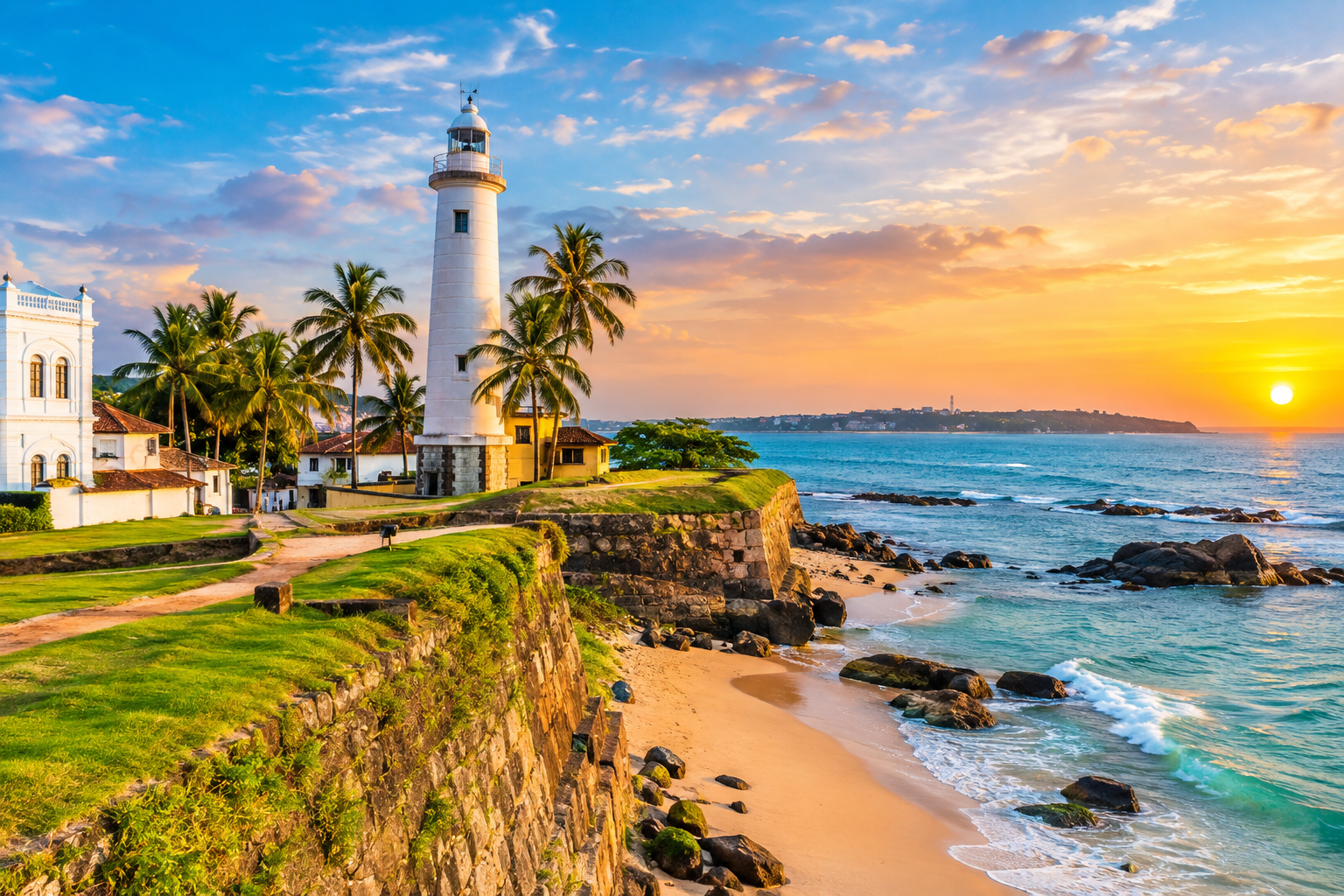
Galle Fort
A 17th-century Dutch fort city — cobbled lanes, ramparts over the ocean, and boutique cafes at every corner.
Galle Fort, a UNESCO World Heritage Site, is a walled city built by the Portuguese and expanded by the Dutch in the 17th century.
Wander the ramparts at sunset, browse boutique shops and art galleries in converted colonial villas, and stop for coffee in one of the fort's many cafes.
- UNESCO World Heritage Dutch colonial fort
- Rampart walk with ocean views, best at sunset
- Boutique shops, galleries and cafes
 Cultural Triangle
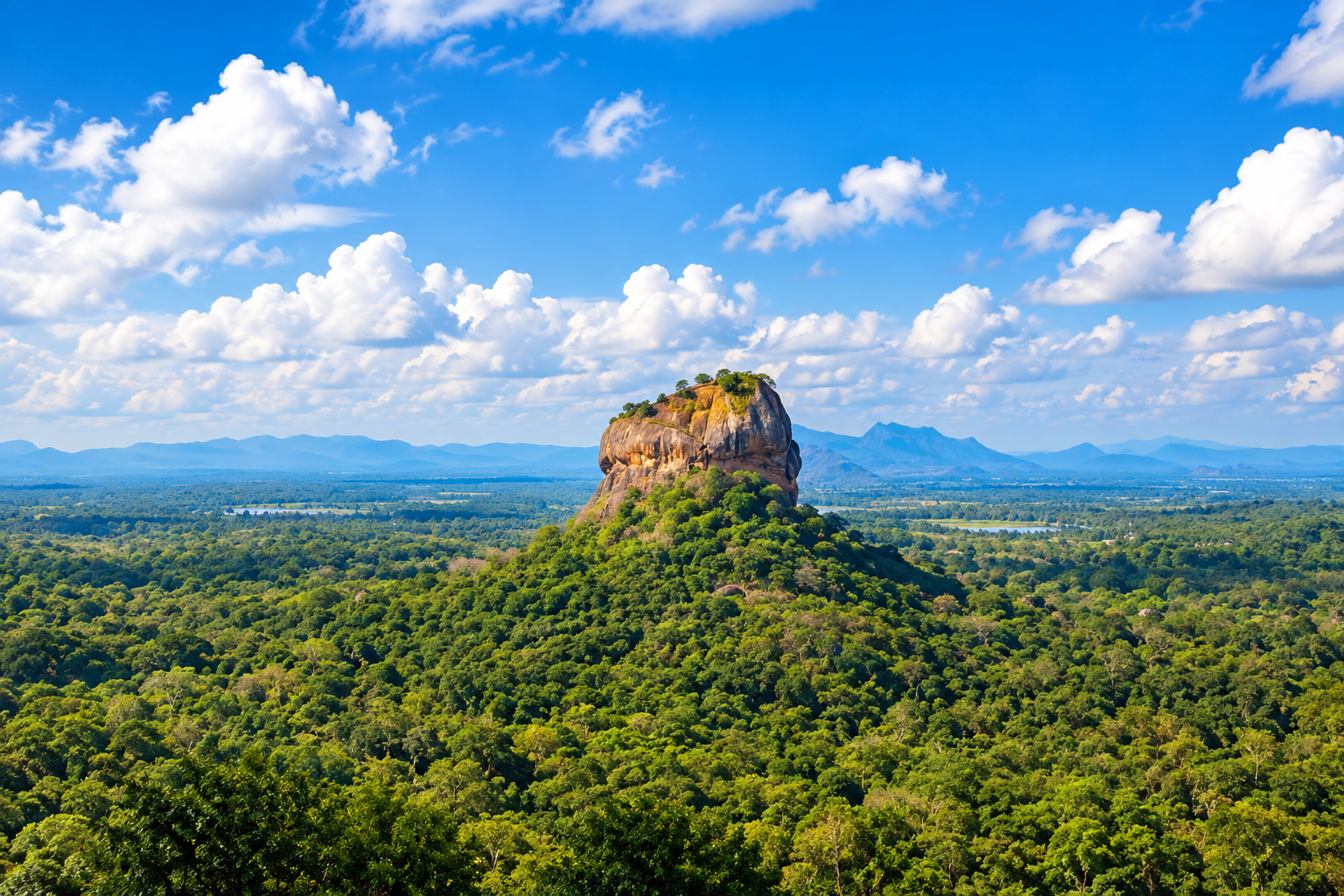
Sigiriya Lion Rock
The ancient rock fortress rising from the jungle — one of Sri Lanka's eight UNESCO World Heritage Sites.
Sigiriya is one of the most recognisable sights in Sri Lanka: a 200-metre granite rock topped with the ruins of a 5th-century royal palace.
The climb passes ancient frescoes, mirror walls covered in centuries-old graffiti, and the iconic Lion's Paw entrance before reaching sweeping views over the surrounding jungle.
- 5th century rock fortress and royal palace ruins
- Ancient frescoes and the famous mirror wall
- Panoramic summit views over the cultural triangle
- view of sigiriya from pidurangala
- visiting the dabulla golden temple
- sigiriya village tour
 South Coast
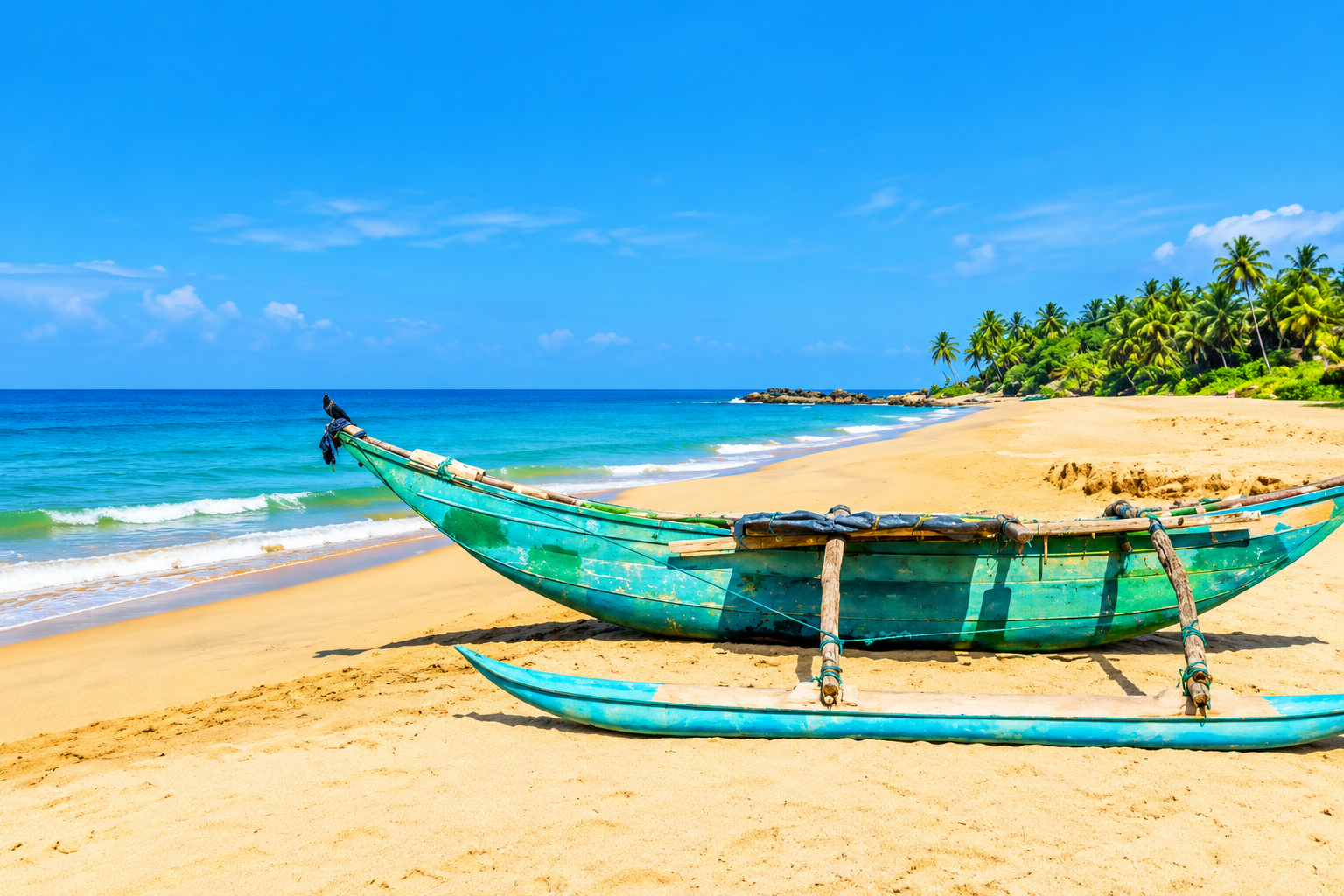
Bentota Beach
Golden sand, calm water and a river meeting the sea — the south coast's classic beach-and-watersports base.
Bentota is where the south coast's beach resorts are at their most polished — long stretches of golden sand, calm swimmable water, and a wide range of watersports.
The Bentota River meets the ocean here, making it the starting point for river safaris through mangroves alongside the beach itself.
- Calm, watersports-friendly beach
- Bentota River safari through mangroves
- Turtle hatchery and Brief Garden nearby
 South Coast
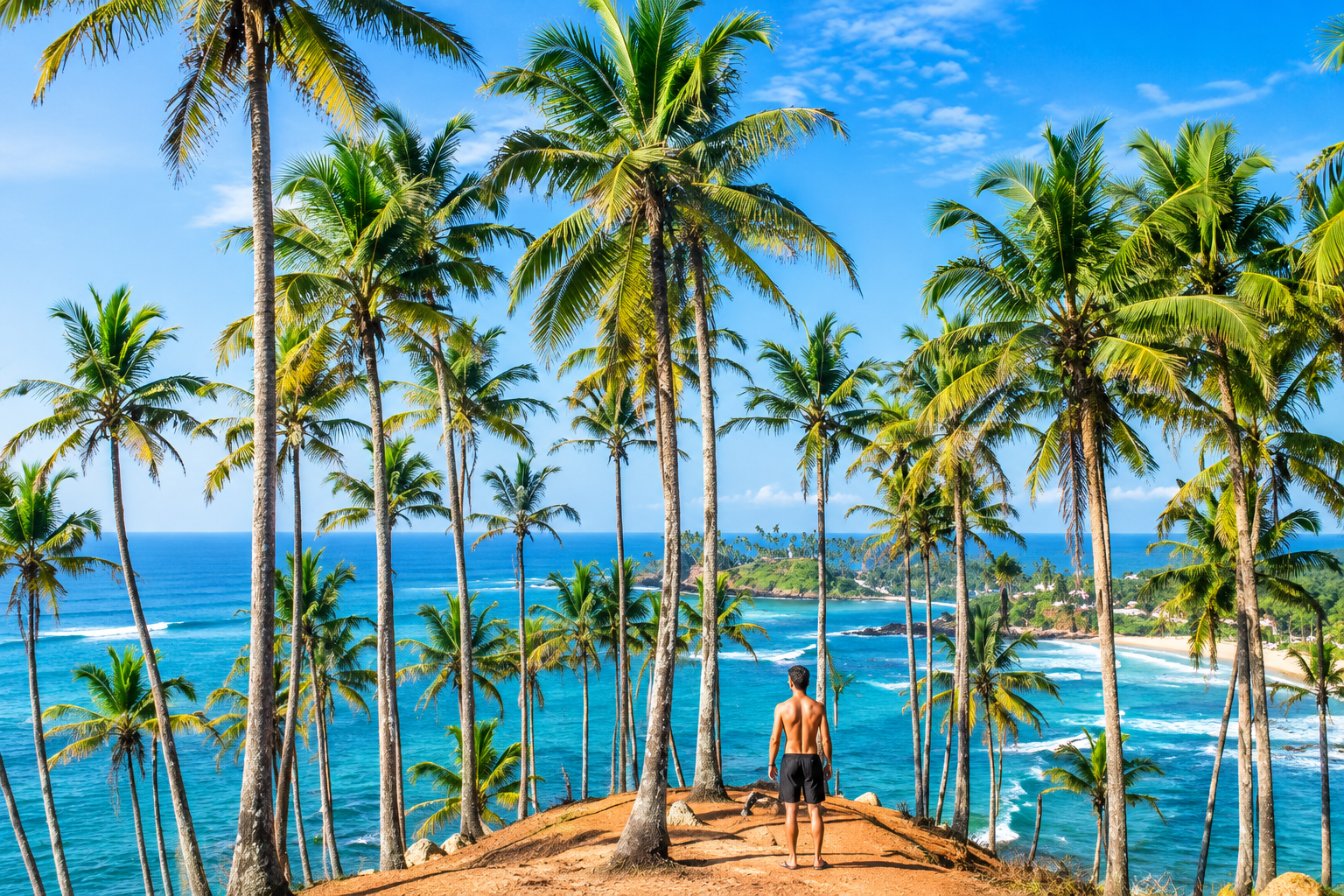
Mirissa Beach
A crescent bay backed by palm trees, and Sri Lanka's launch point for blue whale watching.
Mirissa's laid-back curve of golden sand is one of the south coast's most photogenic beaches, framed by coconut palms and calm, swimmable water.
Boats leave at dawn from Mirissa harbour for a chance to see blue whales and sperm whales, alongside playful pods of dolphins.
- Blue whale and dolphin watching boat trips
- Golden, palm-fringed beach
- Relaxed beachfront cafes and sunset views
 East Coast
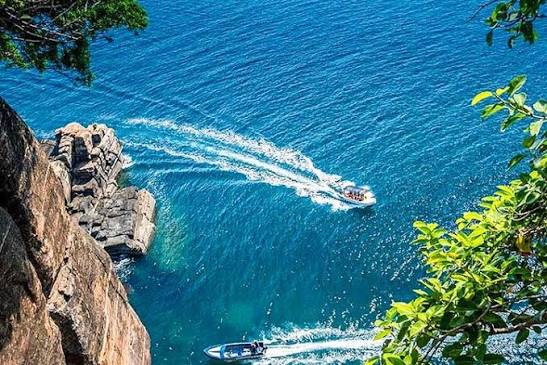
Trincomalee Beach
Sri Lanka's east-coast gem — turquoise water, a natural deep harbour, and some of the island's best diving.
Trincomalee sits on one of the finest natural harbours in the world, with calm, clear water that makes it one of Sri Lanka's best spots for swimming, snorkelling and diving.
The east coast season (May–September) runs opposite the south-west, so it's a great choice when Bentota and Galle are in their off-season.
- Calm, clear water for swimming and snorkelling
- Pigeon Island National Park nearby
- Whale watching season March–August
 Central Province
Kandy
The last hill capital, and home to Sri Lanka's most sacred relic.
Kandy was the final stronghold of Sri Lanka's kings before colonial rule, and it still feels like a capital — a lake at its centre, hills on every side, and the Temple of the Sacred Tooth Relic drawing pilgrims every evening for the drumming that opens its doors.
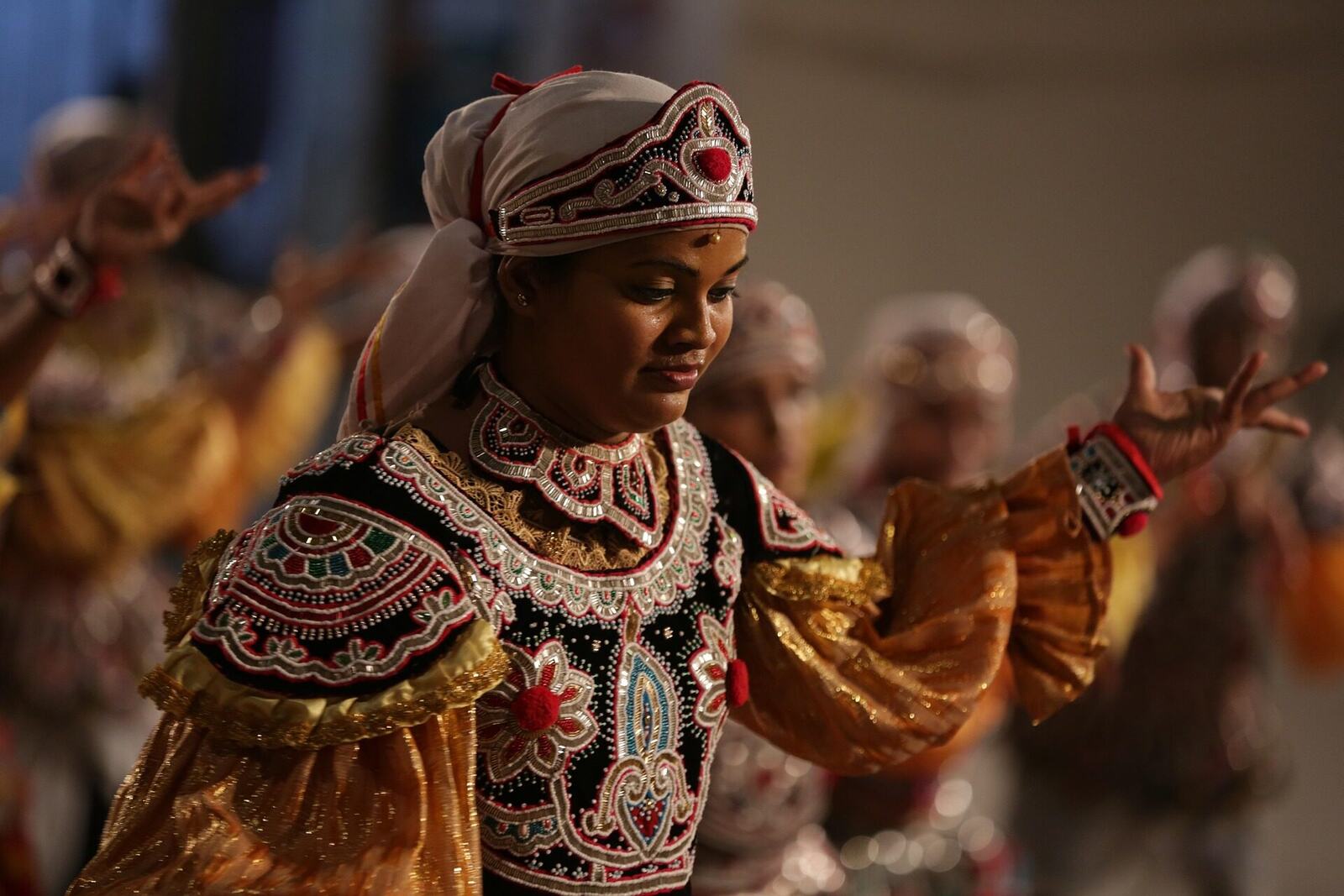
It's also the best place on the island to see a full Kandyan dance performance — drummers, fire, and the acrobatic Ves dance in full costume — and it sits right on the scenic train line up to the hill country.
- Temple of the Sacred Tooth Relic
- Evening Kandyan dance performances
- Royal Botanical Gardens, Peradeniya, nearby
 Central Highlands
Nuwara Eliya
Cool mountain air, tea estates, and a strange colonial hangover.
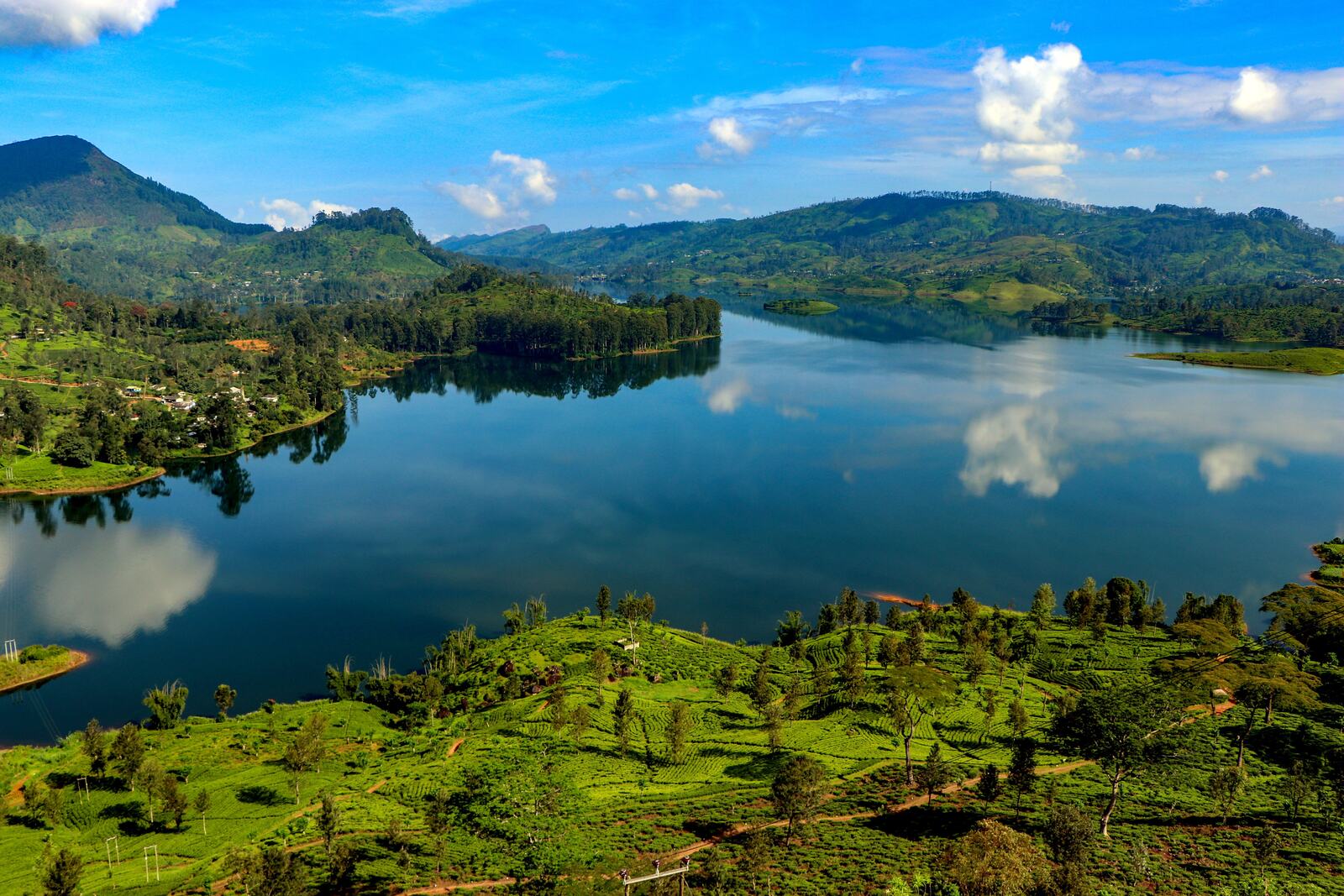
At close to 2,000 metres, Nuwara Eliya is noticeably cold in the evenings — locals call it 'Little England' for the old bungalows, the golf course, and the tea rolling out over every hillside as far as you can see.
Most visitors combine a working tea factory tour (you'll walk the same floors the pluckers do) with a slow drive through the estates themselves, where the roads run right along the edge of the tea rows.
- Working tea factories open for tours
- Cool climate — a genuine break from the lowland heat
- Gregory Lake and colonial-era architecture
 Uva Province
Ella
Small hill town, big views — and the train ride everyone talks about.
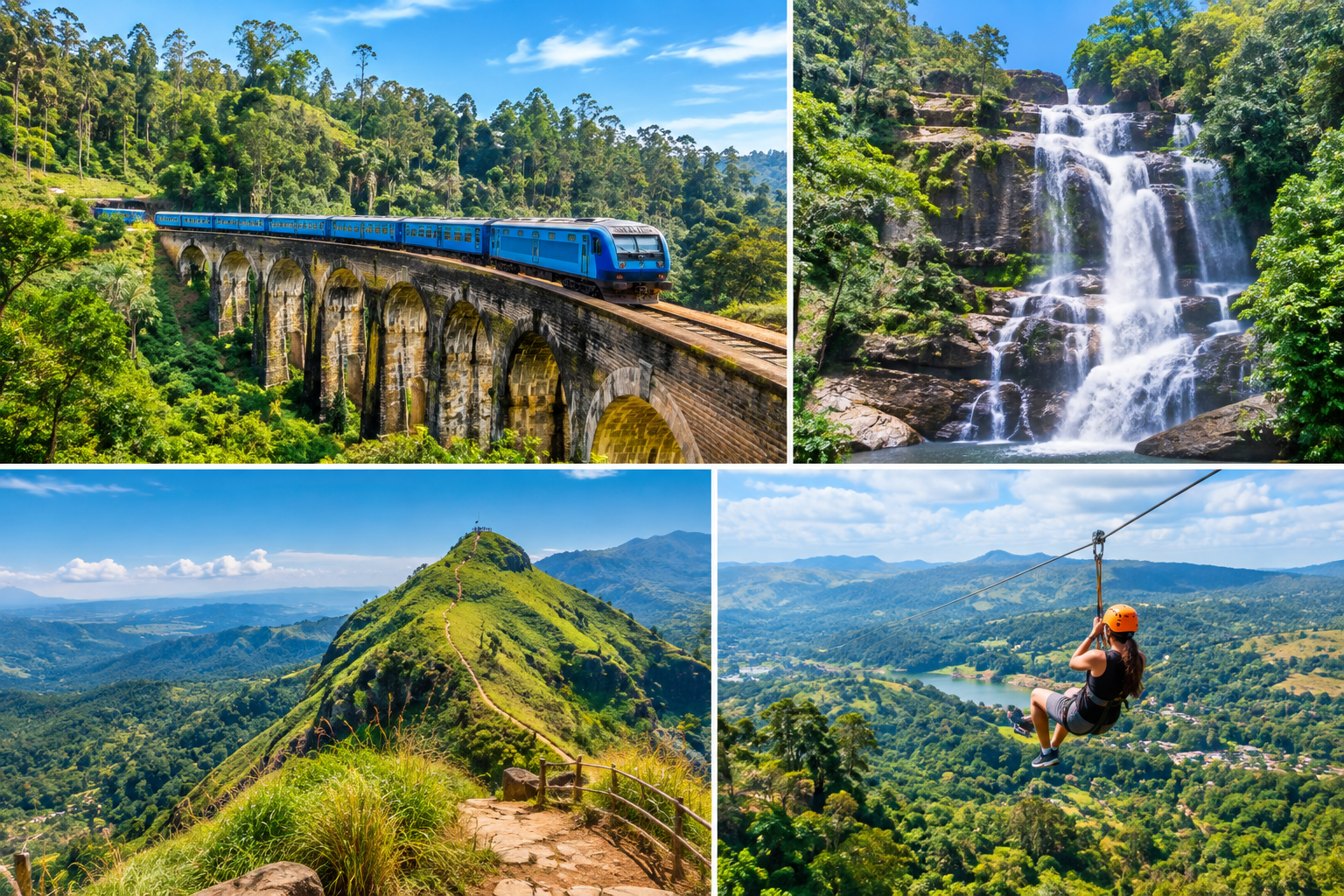
Ella is compact enough to walk everywhere, which is most of its appeal: Little Adam's Peak is an easy sunrise walk, Ella Rock a longer one, and the Nine Arch Bridge sits right in the middle of tea country with a train crossing it a few times a day.
The train journey up from Kandy — or onward to Badulla — is often called one of the most scenic in the world, and Ella is the natural place to break the trip and stay a night or two.
- Nine Arch Bridge
- Little Adam's Peak and Ella Rock viewpoints
- Scenic train ride from Ella to Nanuoya
- Visit Ravana Waterfall
- Tea factory tour and tea tasting
- swing /flying at Ravana pool club (optional)
 North Central Province
Anuradhapura
Sri Lanka's first capital, and one of the oldest continuously restored cities on earth.
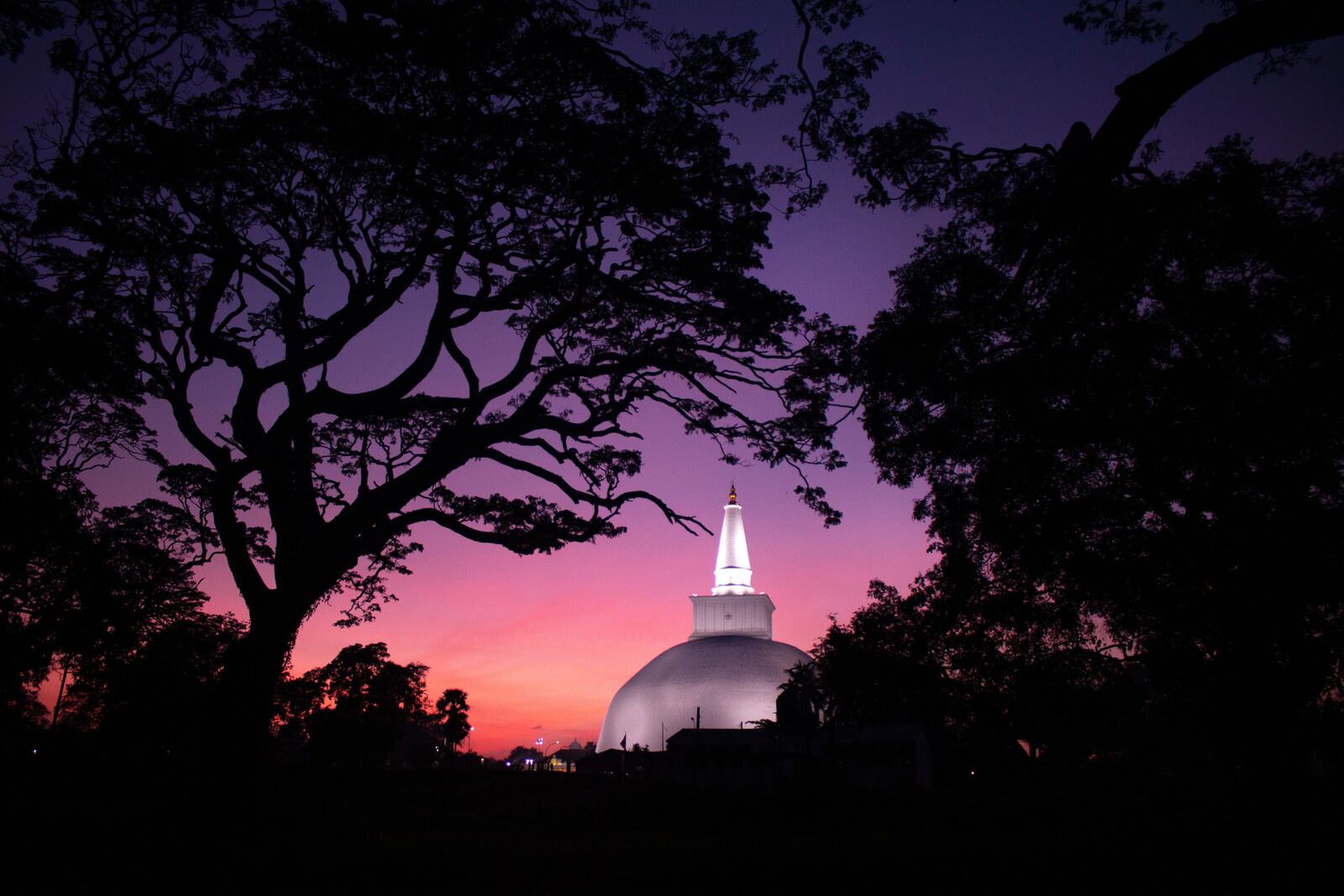
Founded around the 4th century BC, Anuradhapura was the island's capital for over a thousand years. The scale is what surprises most visitors — dagobas (stupas) like Ruwanwelisaya and Jetavanaramaya were among the tallest structures in the ancient world, built entirely of brick.
The sacred Bodhi tree here, Jaya Sri Maha Bodhi, is grown from a cutting of the original tree in India under which the Buddha is said to have attained enlightenment, and is documented as the oldest human-planted tree in the world with a known planting date.
- Jaya Sri Maha Bodhi, the sacred fig tree
- Ruwanwelisaya and Jetavanaramaya dagobas
- Best explored slowly, by bicycle
 North Central Province
Polonnaruwa
Sri Lanka's medieval capital, compact enough to see properly in a day.
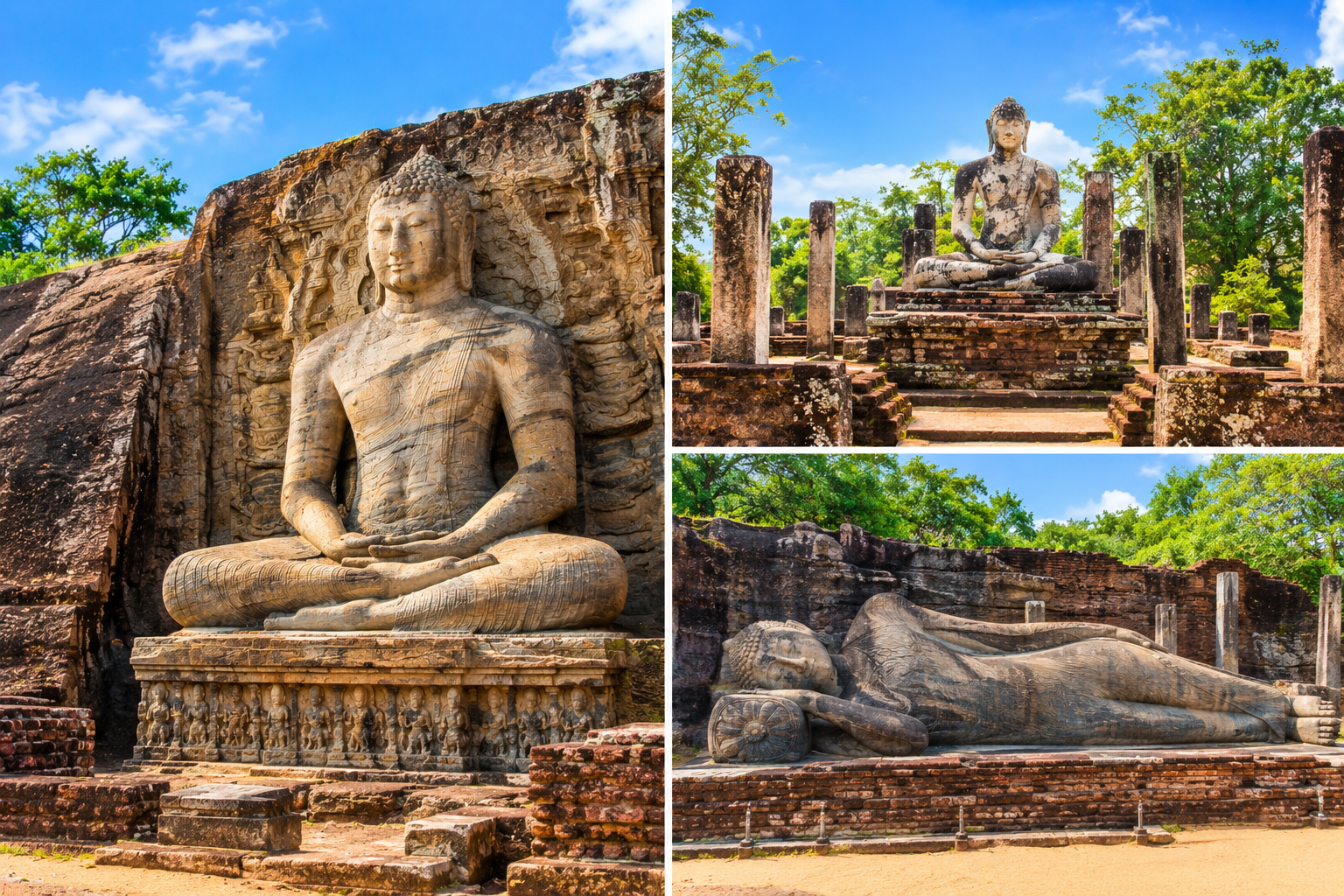
Polonnaruwa succeeded Anuradhapura as the capital in the 11th century, and its ruins are closer together and better preserved — the royal palace, the audience hall, and the quadrangle of temples can all be covered on foot or by bicycle in a single morning.
The highlight for most visitors is Gal Vihara: four Buddha statues carved directly into a single granite outcrop, finished with a precision that still isn't fully explained.
- Gal Vihara's rock-cut Buddha statues
- The royal palace and council chamber ruins
- Compact enough to cycle in half a day